Why Gradients Is the Colorful Font Your Brand Needs
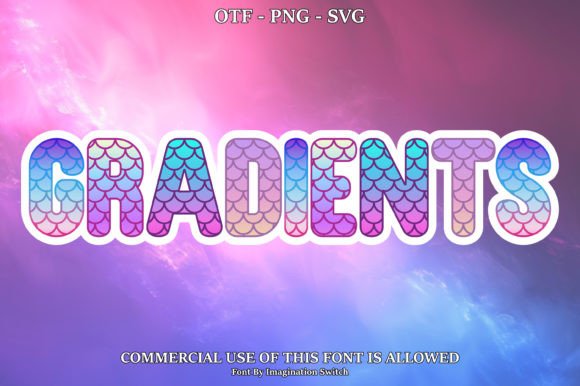
There are thousands of typefaces available today, but most fall into predictable categories: safe sans-serifs for body text, elegant serifs for print, and the occasional script font for a touch of flair. Every once in a while, though, a typeface surfaces that breaks the mold entirely. It doesn’t just display letters; it performs. Gradients is exactly that kind of typographic creation. It isn’t just a collection of glyphs; it is a complete visual system that utilizes intriguing colors and smooth transitions to enhance its visual appeal. For designers, entrepreneurs, and content creators looking to inject immediate personality into their work, this font offers a solution that is as practical as it is mesmerizing.
A Modern Typography Masterpiece
What sets this font apart from a standard premium font is its construction. With a complete set of characters, including uppercase, lowercase, and numbers, this font has been meticulously designed to provide flexibility across various types of projects. It avoids the trap of being a "gimmick" font that only works for a single headline. Instead, it offers a cohesive aesthetic that allows you to build entire visual narratives. When you utilize this font, you introduce uniqueness and creativity to your designs without needing advanced skills in digital painting or complex layering in Photoshop.
The carefully chosen colors for each character add a mesmerizing visual touch, making each word and number stand out. Think of it as modern typography meeting digital art. The gradients aren't jarring or chaotic; they are curated to feel fluid and high-end. This makes it a powerful design asset for anyone working in web design, editorial design, or social media graphics, where grabbing attention in the first two seconds is the difference between a scroll-past and a click.
Practical Applications for Branding and Business
As a designer or business owner, you might wonder where a creative font like this fits into a professional workflow. The answer lies in its versatility as a display font. It isn't meant for long paragraphs of legal text, but it is the hero element for headers, logos, and call-to-action buttons.
- Logo Design: If you are launching a tech startup, a creative agency, or a lifestyle brand targeting Gen Z and Millennials, Gradients can serve as the foundation of your brand identity. It immediately signals that your brand is modern, bold, and unafraid of color.
- Packaging Design: Physical products need to pop on the shelf. Using this typeface for the product name on packaging—whether it's a coffee bag, a cosmetics box, or a vinyl sleeve—adds a tactile, premium feel that standard black ink cannot achieve.
- Digital Products: If you sell templates, courses, or e-books, the cover art is your sales pitch. A creative font like this can make a digital PDF look like a high-budget publication, increasing perceived value.
- Marketing Assets: From email headers to banner ads, the font ensures your marketing materials are consistent and eye-catching. It works exceptionally well for "Sale" graphics or announcement posts where you need the text to scream "Look at me!"
Enhancing Visual Communication
One of the biggest challenges in design is achieving visual consistency while keeping things fresh. Because Gradients includes a full character set, you can maintain a consistent brand identity across multiple touchpoints. You don't have to switch to a different style for your numbers or punctuation; everything speaks the same language.
Furthermore, this font helps solve the readability issue often associated with decorative typefaces. While many handwritten fonts or overly stylized scripts can be difficult to decipher at small sizes, the structural integrity of this typeface ensures that words remain legible even when used in dynamic compositions. It strikes a balance between artistic expression and functional communication, which is the holy grail for any marketing professional.
Pairing and Project Strategy
Using a display font with built-in gradients requires a bit of strategic thinking. Because the font itself is visually heavy and colorful, it pairs best with neutral companions. You generally want to avoid pairing it with another script font or a busy serif font, as this will create visual noise that tires the viewer's eye.
Instead, consider these pairing strategies:
- The Minimalist Approach: Pair Gradients with a clean, geometric sans serif font for body text. The contrast between the colorful, textured headers and the clean, monochrome body text creates a sophisticated hierarchy. This works beautifully for blog layouts and editorial design.
- The Bold Contrast: If your project is high-energy—like a poster for a music festival or a streetwear brand—pair the gradient text with a heavy, blocky sans-serif. Use the gradient font for the main event title and the heavy font for the date and location.
Before finalizing your design, always test your font pairings in context. A combination that looks good in a design file might look cluttered on a mobile screen. Review the included font styles to see if there are variations in weight or opacity that might work better for specific backgrounds. For instance, if you are placing the text over a busy photograph, you may need to place a semi-transparent shape behind the text to ensure the colors of the font remain visible and the message isn't lost.
Licensing and Commercial Use
For small business owners and freelancers, the legal side of design assets is just as important as the aesthetic side. When investing in a commercial font, you must review the licensing terms carefully. Most premium licenses cover standard uses like logos, websites, and printed flyers. However, if you plan to use the font on merchandise (t-shirts, mugs, posters) that you sell directly, or within digital products (like Canva templates) that you distribute to clients, you often need an extended license.
Always check the End User License Agreement (EULA) provided with the font. Ensuring you have the right to use the font commercially protects your business from legal headaches down the road. It also ensures that the font creators are compensated for their work, allowing them to continue producing high-quality design assets for the community.
Final Thoughts on Creative Execution
Ultimately, typography is about connection. You want your audience to feel something the moment they see your text. Whether you are designing a wedding invitation, a corporate presentation, or a viral social media post, the tools you choose define the outcome. Gradients offers a way to bypass the hours of manual color grading and gradient mapping usually required to achieve this look. It provides a ready-made solution that doesn't sacrifice quality or flexibility. By integrating this typeface into your toolkit, you are not just choosing a font; you are choosing to make your words—and your brand—unforgettable.