Pinky Candy: The Playful Font That Adds Instant Charm
There’s a particular kind of design challenge that comes up again and again: how to make something feel joyful, approachable, and memorable without crossing into territory that looks amateurish. Whether you’re designing a holiday card, building a brand for a children’s product, or creating social media posts that need to pop, the typography you choose carries enormous weight. A font can whisper sophistication or shout celebration. It can feel clinical or warm, distant or inviting. And sometimes, what you need is something that simply makes people smile the moment they see it.
That’s where a decorative color font like Pinky Candy enters the conversation. It’s not trying to be everything to everyone. Instead, it occupies a specific, delightful niche: a typeface that combines playful visual personality with surprising versatility across seasons, themes, and project types. If you’ve been searching for a creative font that bridges the gap between whimsical and functional, this one deserves a closer look.
What Makes a Decorative Color Font Different
Before diving into applications, it helps to understand what sets a color font apart from a standard typeface. Traditional fonts—whether serif, sans serif, script, or handwritten—rely on a single color, typically black or whatever you assign in your design software. A color font, by contrast, ships with built-in color information. The glyphs themselves contain multiple hues, gradients, or patterns that render automatically when you type.
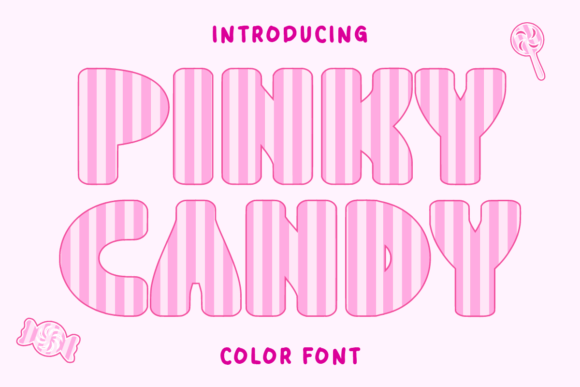
Pinky Candy takes this concept and leans into a candy-coated aesthetic. Think of the kind of cheerful, rounded letterforms you might see on a child’s birthday banner or a sweet shop sign, but with a level of polish that makes them suitable for professional design work. The shapes are bold enough to read clearly at various sizes, yet detailed enough to hold visual interest when used as a headline or display element. Each letter carries a sense of texture and dimension that flat, single-color fonts simply can’t replicate on their own.
This isn’t a font you’d choose for body copy in a legal document. But for projects where personality and visual impact matter more than corporate restraint, it fills a gap that few other typefaces address as effectively.
Seasonal Projects and Themed Designs
One of the strongest use cases for Pinky Candy is seasonal and holiday-themed work. Designers who create assets for Christmas, New Year, Valentine’s Day, and other celebrations know the pressure of producing fresh, eye-catching materials year after year. Audiences grow tired of the same snowflake motifs and red-and-green palettes. A font that inherently carries festive energy can do a lot of heavy lifting in a design.
Imagine a Christmas market poster where the event name practically glows with color. Or a Valentine’s Day Instagram story where the typography itself feels sweet and romantic. New Year’s party invitations that look celebratory before anyone even reads the words. These are the kinds of applications where a display font with built-in color and playful geometry becomes genuinely useful rather than just decorative.
Beyond the major holidays, this typeface works beautifully for birthday parties, baby showers, bakery branding, candy shops, ice cream parlors, toy stores, and any project targeting a younger audience or evoking nostalgia. The visual language is universal enough that it doesn’t lock you into a single holiday or occasion.
Real-World Applications Across Industries
Let’s get specific about where and how a font like this can actually be used, because the range is broader than many people initially assume.
Packaging design is one of the most natural fits. If you’re a small business owner creating labels for handmade soaps, candles, baked goods, or artisan candies, the typography on your packaging is often the first thing a customer notices at a craft fair or on a shelf. Pinky Candy gives that packaging an immediate visual identity that communicates fun and quality without requiring extensive graphic design skills.
Social media graphics benefit enormously from distinctive typography. In a feed where hundreds of posts compete for attention, a header or quote set in a colorful, eye-catching typeface can stop the scroll. It works particularly well for promotional announcements, sale banners, holiday greetings, and any content where you want the text itself to function as a visual element rather than just information.
Greeting cards and invitations are another obvious but important application. Whether you sell printable cards on Etsy or simply want to create personalized invitations for your child’s birthday party, having access to a font that looks polished and celebratory saves hours of design time. Instead of layering effects and decorations around plain text, the typography itself becomes the decoration.
Merchandise and print-on-demand products—think mugs, tote bags, pillows, t-shirts—often rely on bold, simple typography that reads well at a glance. A creative font with built-in color interest can make a design feel complete without additional illustration or graphic elements, which streamlines the production process and reduces design costs.
Children’s books and educational materials present another strong use case. Young readers respond to visual stimulation, and letterforms that are colorful and distinctive can make reading feel more engaging. Chapter headings, title pages, and activity book covers all benefit from typography that feels energetic and age-appropriate.
Even website headers and blog graphics can incorporate a decorative font strategically. Used sparingly—as a headline, a pull quote, or a featured element—it adds personality to a page without sacrificing the readability that body text demands. The key is knowing when to deploy it and when to let a simpler typeface do the work.
Pairing Pinky Candy with Other Fonts
No single font should carry an entire design project. Even the most expressive typeface needs a partner—a complementary font that handles the quieter work of subheadings, body text, and supporting information. This is where font pairing becomes essential.
Because Pinky Candy is bold, colorful, and visually active, it pairs best with fonts that are clean and understated. A simple sans serif like Open Sans, Lato, or Montserrat provides a calm counterbalance that lets the decorative font shine without creating visual chaos. If your project leans more traditional or editorial, a classic serif like Merriweather or Playfair Display can create an interesting contrast between playful and refined.
Avoid pairing it with other highly decorative or script fonts. Two expressive typefaces competing for attention creates clutter rather than hierarchy. The goal is contrast: one font for impact, another for clarity.
When testing pairings, set them side by side at the actual sizes you plan to use. A combination that looks balanced in a 72-point headline might feel different when the body text is 14 points. Print a test page if the project is physical. View it on multiple screens if it’s digital. These small steps prevent the disappointment of a final product where the typography feels off.
Readability and Practical Considerations
Every designer faces the tension between visual flair and readability. A font can be gorgeous in isolation but frustrating to read in context. With decorative color fonts, this consideration is especially important because the added color and texture can sometimes obscure letterforms at smaller sizes.
Pinky Candy handles this better than many decorative options. The letter shapes are distinct and well-spaced, which helps maintain legibility even when the font is used at moderate sizes. That said, it’s still a display typeface at heart. It works best for headlines, titles, short phrases, and callouts—situations where the text is large and the reader only needs to absorb a few words at a time.
For longer passages, always switch to a complementary body font. This isn’t a limitation; it’s simply how good typography works. A premium font designed for headlines does its job best when it’s allowed to do that job specifically, rather than being stretched into roles it wasn’t built for.
Also worth noting: color fonts render differently across platforms. They display beautifully in applications that support the technology fully—modern design software, updated web browsers, recent operating systems. In environments that don’t support color fonts, they typically fall back to a standard single-color version. This fallback still looks good, but it’s worth testing across the platforms your audience actually uses, especially if you’re creating digital products or web content.
Licensing and Commercial Use
One practical detail that often gets overlooked until it’s too late: licensing. If you’re using a font for personal projects—party invitations for your own family, a school newsletter, a hobby blog—the licensing requirements are usually straightforward. But the moment money changes hands, whether you’re selling a product, creating a client deliverable, or building assets for a business, commercial licensing matters.
Before purchasing any creative font, read the license terms carefully. Understand whether the license covers the specific ways you plan to use the typeface. Can you use it on physical products for sale? In digital downloads? On websites? In client work? Some licenses are per-user, others are per-project, and some offer broad commercial coverage. Getting this right upfront protects you legally and ensures the font creator is compensated fairly for their work.
This is standard practice for any design asset, not just typography. Treat font licensing with the same seriousness you’d give to stock photography, illustration, or any other creative resource you incorporate into professional work.
Making Typography Work for Your Brand
Typography is one of the most powerful tools in brand identity, yet it’s frequently undervalued by small business owners and independent creators. The fonts you choose become part of how people recognize and remember your brand. Consistent use of a distinctive typeface across your packaging, social media, website, and print materials builds recognition over time in the same way a logo or color palette does.
A font like Pinky Candy won’t be the right choice for every brand. A law firm or financial advisor probably shouldn’t build their identity around candy-colored letterforms. But for businesses in children’s products, confections, party supplies, creative services, entertainment, or any space where joy and approachability are brand values, it could be exactly the visual differentiator that sets you apart from competitors relying on the same handful of overused free fonts.
The key is intentionality. Don’t choose a font because it’s trendy or because you saw it on someone else’s design. Choose it because it communicates something specific about who you are and what you offer. When the font’s personality aligns with your brand’s personality, typography stops being a background detail and becomes a genuine competitive advantage.
That alignment—between visual language and brand message—is what separates designs that feel cohesive and professional from designs that feel scattered and generic. And sometimes, finding the right typeface is the piece that makes everything else click into place.